Black Microwave Rice Cooker with Double Lid

Price
Regular price $71.00
Regular price Sale price $71.00
Save $-71
/
  • Free shipping on orders USD $199+
Dishwasher Feature Microwave Feature
  • In stock, ready to ship
  • Backordered, shipping soon

Description

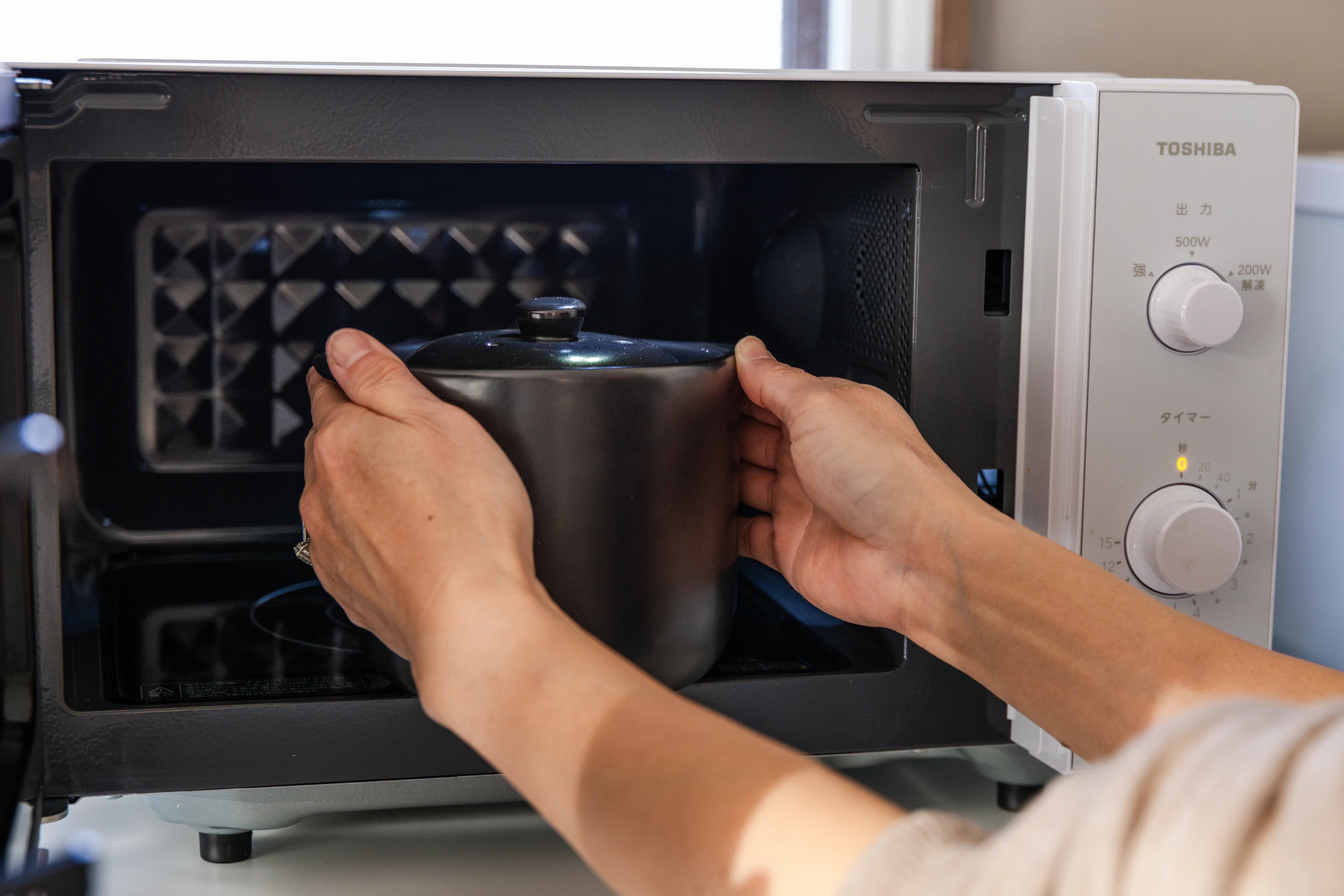
Quick, easy rice from your microwave or stove top. The Black Microwave Rice Cooker with Double Lid transforms everyday cooking by making fluffy and tender rice (up to a 1.5 rice cooker cup maximum) in about 15 minutes. Its smart double lid system regulates steam and prevents overflow, so there is no need to watch the pot or adjust heat. 1

Finished in sleek black, the ceramic body warms evenly, much like a small donabe, enhancing the natural sweetness of each grain. Compact in size, easy to clean, and safe for direct flame when needed, it adapts to small kitchens and busy routines.

When you are busy, tired, or simply craving a bowl of rice without the fuss, this microwave cooker makes it possible. A smart tool for modern kitchens, and simple enough that anyone can enjoy perfectly cooked rice with ease.

Key Features & Benefits:

  • Microwave or Gas Stove Top: Cook rice in the microwave or use direct flame on a gas stove when needed
  • Double Lid Safety: Regulates steam and prevents boil-overs for consistent results
  • No Seasoning Required: This rice cooker donabe does not need to be seasoned prior to first use.
  • Capacity: 1.5 rice cooker cup maximum

Download cooking instructions.

Explore our full Kitchenware collection to discover more exquisite tools.

Specifications

Dimension

5.5" × 6.5" × 5.2" (14 cm × 16.5 cm × 13.3 cm)

Weight

44.1 oz (1,250 g)

Material

Pottery

Craft Type

Banko Ware

Brand

Sento Senga

More Details

Sento Senga

Based in Yokkaichi, Mie Prefecture, Sento Senga carries on the tradition of Banko ware while designing cookware that fits comfortably into modern kitchens. Known for its durable clay and excellent heat retention, Banko ware is ideal for daily use. Guided by a practical yet creative spirit, Sento Senga develops donabe pots, grill plates, and other tools that make home cooking simpler and more enjoyable.

Banko Ware

Originating in Yokkaichi, Mie Prefecture, Banko ware dates back to the mid-Edo period, when merchant and tea enthusiast Nunami Rozan began producing tea utensils in the region. Designated as a National Traditional Craft of Japan in 1979, it is known for its heat resistance and durability, making it ideal for donabe and teapots. Made from semi-porcelain clay rich in minerals, each piece withstands direct heat while retaining warmth efficiently. Balancing strength, practicality, and simple elegance, it remains an essential part of daily life in Japan.

Shipping & Return

We offer a flat rate of USD $25 for shipping to the U.S., and Free Shipping on orders over USD $199.

Please note that we do not ship to P.O. Boxes or APO/FPO addresses due to FedEx’s policies.

Most items are dispatched from Japan within 1-2 business days after order confirmation, and we offer international shipping to customers worldwide.

You may return any items purchased from JOC Goods within 30 days of delivery. If the products are defective or damaged, we will cover the return shipping costs. For other returns, the cost of return shipping will be the customer's responsibility.

Customers also bought

Sento Senga

VIEW MORE PRODUCTS

The Rice Cooker I Reach for on Busy Days

I’ve tested many ways to cook rice over the years, and while I still believe a traditional donabe on the stovetop makes the most delicious rice, this microwave rice pot has earned its place in my kitchen.

It may not replace my donabe, but I reach for it often when cooking a smaller portion for Mr. JOC and me. This donabe rice cooker is also great for my kids, who are in college—they love donabe rice, and this comes close with much less effort.

It’s simple, compact, and versatile—perfect for everyday life when you want great rice with minimal fuss.

Nami’s Pick portrait

1. Effortless Microwave Cooking (and Reheating)

Product image - Nami’s Pick

What makes this rice pot special is how quick and convenient it is. You can cook rice entirely in the microwave—no stovetop, no bulky rice cooker, no babysitting.

The thick ceramic walls distribute heat evenly, so the rice cooks up plump and tender. The double-lid system helps control steam, preventing boil-overs while locking in moisture. I can also reheat leftover rice in the same pot without drying it out. It’s a lifesaver on busy days.

2. One Pot, Many Uses

Product image - Nami’s Pick

This isn’t just a microwave tool. When I want more control, I can use it on the stovetop, too. That flexibility makes it practical for such a compact piece.

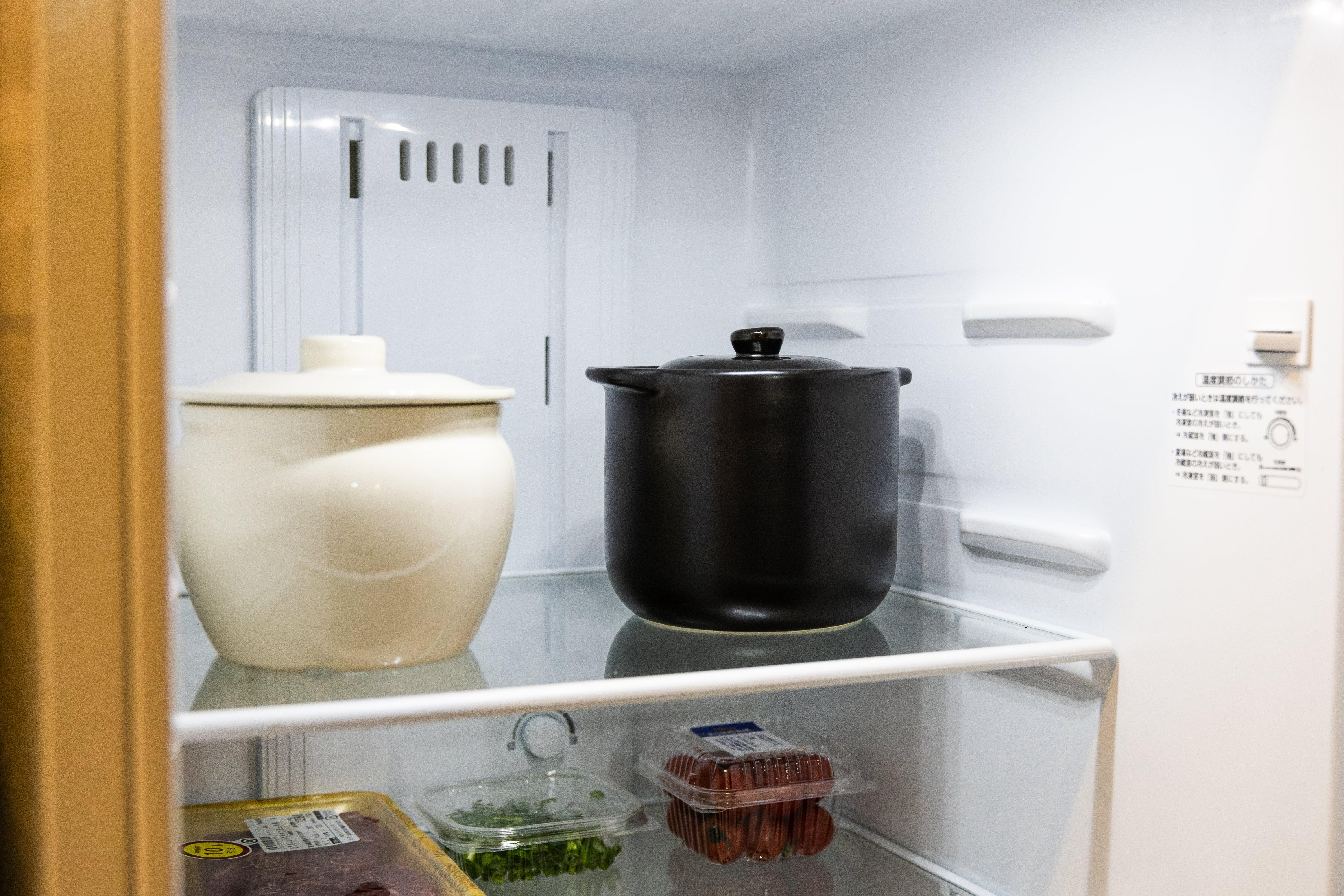
It also works beautifully as a rice storage container—cook, cool slightly, cover, and refrigerate right in the pot. Later, reheat and serve from the same pot. Fewer dishes and less cleanup every time.

3. From Cooker to Table, Beautifully

Product image - Nami’s Pick

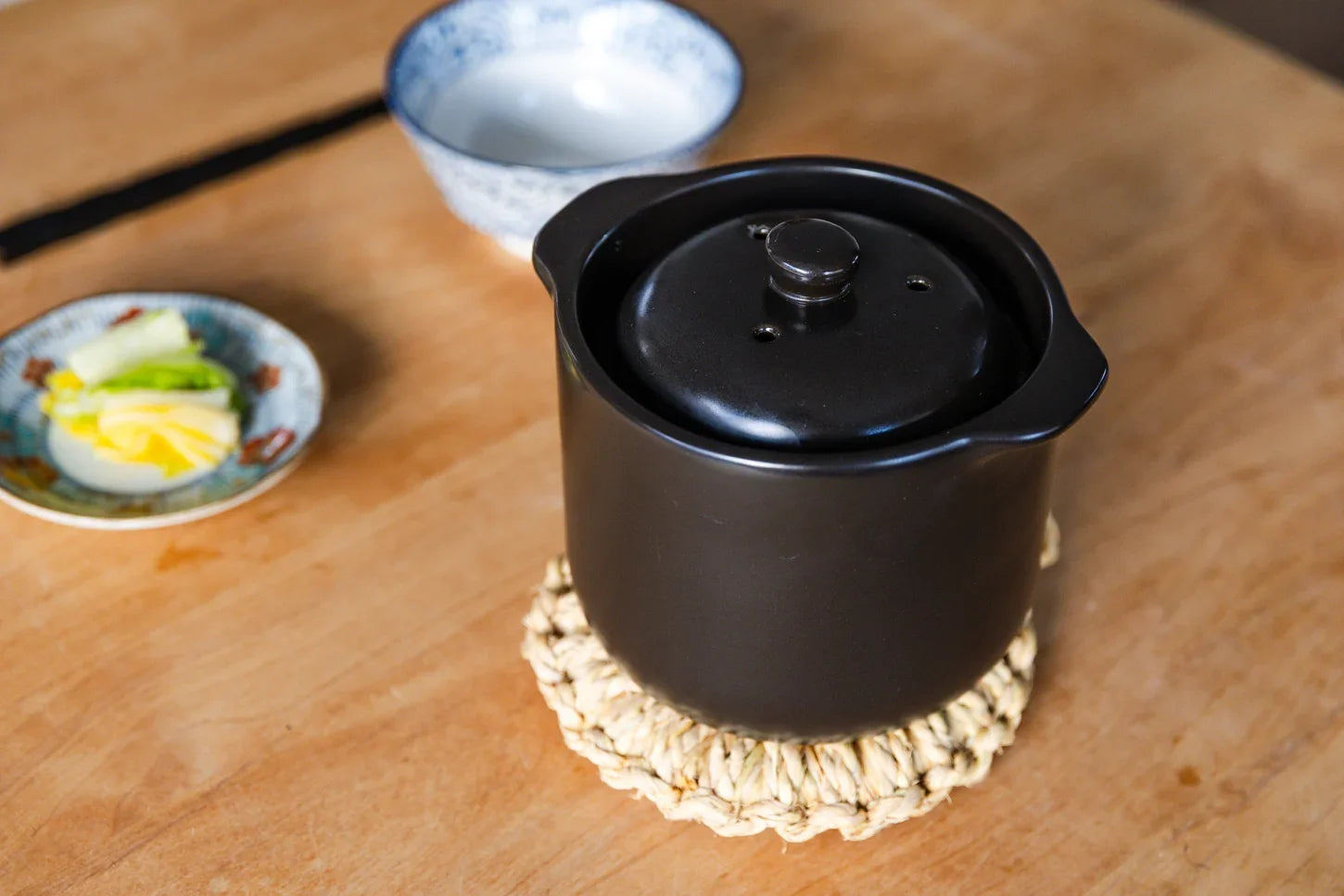
I love kitchen tools that are both functional and beautiful, and this rice pot checks both boxes. Its clean design lets me bring it straight to the table—no transferring needed.

It keeps rice warm while you eat, looks lovely with any meal, and doesn’t take up much space. Its compact size is ideal for a small kitchen, apartment, or dorm room.

I recommend this microwave rice pot to anyone who wants delicious rice without the fuss—especially if space is limited or you cook for one or two people. Once you try it, you may reach for it as often as I do.

Nami (Namiko Hirasawa Chen), author at JOC Goods

— Namiko Hirasawa Chen

FAQ

Where can I find English instructions for the microwave rice cooker?

An English-language PDF is available for download at here — the printed insert in the box is in Japanese only. Email support@jocgoods.com if you would prefer the PDF sent directly to you.

Do I need to soak the rice before using the microwave rice cooker?

Yes. Rinse the rice until the water runs mostly clear, then soak the rice and water inside the cooker for 20–30 minutes before microwaving. Soaking lets the grains absorb water evenly so they cook fluffy, not chalky. Cook on full power for the time listed in the English PDF guide, then rest covered before serving.

Do I need to season my donabe before the first use?

Yes, we recommend seasoning before the first use. Seasoning seals the porous clay and helps prevent leaks or hairline cracks. There are two simple methods: a 30-minute rice porridge (okayu) cook, or a quick 10-minute simmer with water plus 1–2 tablespoons of cornstarch or potato starch. Cool fully and rinse before storing.

Can I deep fry in this donabe?

No, donabes are not safe for deep frying. They are designed for simmering, steaming, hot pot, soups, and rice — the very high oil temperatures used for deep frying can damage the clay and cause cracking. For frying, use a stainless or cast iron pot.

Is this donabe oven safe?

It depends on the model. The majority of our donabes are not oven safe and are stovetop-only. Ginpo Kikka donabes are the main exception — they are oven safe, but please remove the lid before placing in a preheated oven. If the product description does not mention oven use, email support@jocgoods.com before using it in the oven.

Are donabes microwave safe?

It depends on the model. The majority of our donabes are not microwave safe — uneven heating can cause the earthenware to crack. Ginpo Kikka donabes are the main exception and can be microwaved. If the product description does not mention microwave use, please email support@jocgoods.com before microwaving. For models that are not microwave safe, reheat on the stovetop over low heat.

Why is liquid seeping through the outside of my donabe during cooking?

A little moisture on the outer surface is normal — donabe clay is porous and naturally absorbs broth during cooking. However, noticeable seeping often means the initial seasoning (me-dome) was insufficient. Re-season by cooking a 30-minute rice porridge (okayu), or simmer water with 1–2 tablespoons of cornstarch or potato starch for 10 minutes, then cool and rinse before storing.

Can I wash my donabe with regular dish soap?

Yes, dish soap is fine. The key rules: never soak the donabe in water (the porous clay absorbs it), never put it in the dishwasher, and dry it completely before storage to prevent mustiness. Use a soft sponge — avoid metal scrubbers or abrasive pads, which scratch the glaze and clay.

What size donabe should I choose?

Use serving size as your guide. For 2–3 people, a 25–27 cm (10–11 in) donabe is ideal. For 3–5 people, choose 29–32 cm (11–13 in). When in doubt, size up — extra capacity is more useful than running out, especially for hot pot meals where ingredients build up at the table.

What should I do if food burns or sticks to the inside of the donabe?

Soak the donabe in warm water for 10–15 minutes to loosen the residue, then gently scrape with a wooden or silicone utensil. For stubborn spots, add water plus 1 tablespoon of baking soda, simmer 5 minutes, let cool, and rinse. Avoid metal scrubbers, which damage the clay surface.

Are the small dents, pinholes, or texture marks on this ceramic piece a defect?

No. These marks are normal characteristics of handcrafted Japanese ceramics, formed during shaping, glazing, or firing in small kilns. Subtle dents, tiny pinholes, and slight texture variations are part of the artisan process — not defects. If you see clear cracks, chips, or peeling glaze, please email support@jocgoods.com with photos.

Are the small black or dark specks in the glaze safe?

Yes, the dark specks are safe. They are natural iron minerals in the clay that react during high-temperature firing, leaving small marks under the glaze. They do not affect food safety, durability, or performance, and are part of the organic character of handmade Japanese pottery.

Do your ceramic dishes contain lead or cadmium?

Some glazed ceramic pieces may contain trace amounts of lead or cadmium sealed beneath the glaze, at levels safe for food use. Japanese ceramic tableware is regulated under the Food Sanitation Act, which sets leaching limits for lead and cadmium in glazed tableware. Testing standards differ by country, so we cannot guarantee compliance with every regional regulation.

Why does each handcrafted bowl or plate look slightly different from the photo?

Each piece is shaped, glazed, and fired by hand in small artisan kilns across Japan, so subtle differences in color, glaze pattern, weight, and even rim shape are expected. No two pieces are identical. This natural variation is what makes each item one of a kind, not a quality flaw.

Even if a ceramic piece is dishwasher safe, should I still hand-wash it?

Dishwasher-safe pieces can go in the dishwasher, and doing so will not damage the glaze. That said, ceramic (earthenware) is more prone to chipping than porcelain, and pieces can knock against the rack or other dishes while loading and unloading — which is the most common cause of small chips. For longevity, hand-washing with warm water and a soft sponge is gentler.

Can I add a gift message to my order?

Yes. You may add a personalized gift message of up to 250 characters at checkout — it is printed on a card and included inside the package. Prices and order details are never shown on the card or anywhere in the shipment, so the recipient sees only your message and the gift itself.

Will my order be wrapped as a gift?

Yes. Every JOC Goods order is wrapped in a traditional Japanese furoshiki cloth before shipping at no extra charge — both gifts and personal orders. If your order includes many or large items, the furoshiki may be packed inside the box rather than wrapped around them. Prices are never included in any shipment.

Recently viewed